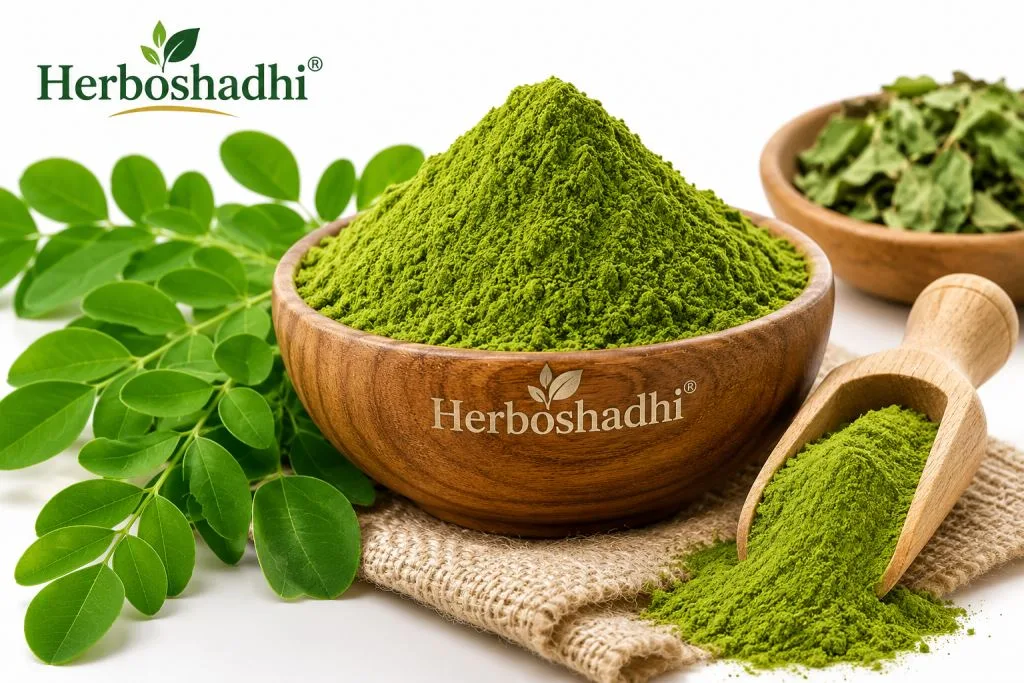
Moringa powder is simply the leaves of the drumstick tree (Moringa oleifera), dried and milled into a fine green powder. In India the tree is in almost every backyard, and its leaves and pods have been part of home cooking and Ayurveda for centuries. Today moringa powder is one of the most popular green superfoods in the world. This guide explains what it contains, how to use it every day, how much to take and how to tell a pure, good-quality powder from a poor one.
What is moringa powder?
Moringa is a fast-growing tree native to the foothills of the Himalayas and grown across India, Africa and South-East Asia. It is called sahjan or sajna in Hindi, murungai in Tamil and shigru in Sanskrit. The leaves are harvested, washed, dried away from direct sun and ground into powder. Good moringa powder is made from the leaf only, with no stems, fillers or added colour.
What does moringa powder contain?
Moringa leaves are naturally rich in nutrients, which is why the powder is so widely used in food and nutrition products. A spoonful of leaf powder typically provides:
- Vitamins such as vitamin A (as beta-carotene), vitamin C and several B vitamins
- Minerals including calcium, potassium, magnesium and iron
- Plant protein, with a good spread of amino acids for a leafy green
- Antioxidant plant compounds such as flavonoids (for example quercetin) and polyphenols
- Fibre and natural chlorophyll, which gives it the deep green colour
The exact amounts vary with the soil, the season, how the leaves are dried and how fresh the powder is. Drying at low temperature and storing the powder away from light and air protect the nutrients best.
Benefits of moringa powder
Moringa is a food, not a medicine, and it works best as part of a balanced diet. Here is why so many people add it to their routine.
An easy way to add greens to your day
Many of us do not eat enough leafy vegetables. One teaspoon of moringa powder stirred into food or a drink is a simple way to add the vitamins and minerals of green leaves without extra cooking.
Naturally rich in antioxidants
Moringa leaves contain flavonoids and polyphenols, plant compounds that act as antioxidants. A diet rich in antioxidant foods such as fruits, vegetables and herbs is part of a healthy lifestyle.
Plant protein for vegetarian diets
For a leaf, moringa is high in protein. It is not a replacement for dal or paneer, but it is a useful extra for vegetarian and vegan diets, especially in smoothies and protein blends.
A respected herb in Ayurveda
In Ayurveda, shigru (moringa) has traditionally been used in food and home remedies, and its leaves are still cooked into sabzi, dal and soups across India. Moringa powder keeps that tradition convenient for modern kitchens.
How to use moringa powder
Moringa has an earthy, slightly grassy taste, similar to spinach with a hint of green tea. It blends easily into everyday food:
- Smoothies and juices: half to one teaspoon with banana, mango or pineapple hides the green taste well.
- Dal, sabzi and curries: stir it in at the end of cooking.
- Roti, paratha and thepla: mix one to two teaspoons into the dough.
- Soups and raita: sprinkle over before serving.
- Warm water or tea: whisk into warm (not boiling) water with lemon and honey.
Tip: add moringa powder after cooking or near the end, because long cooking at high heat reduces some of its vitamins.
How much moringa powder should you take per day?
For most adults, half a teaspoon to one teaspoon a day (about 2 to 3 grams) is a common starting amount. Start small, as moringa is rich in fibre, and increase slowly if it suits you. More is not better: a small daily amount used regularly is the way most people take it.
Speak to your doctor before taking moringa if you are pregnant or breastfeeding, or if you take medicines for blood pressure, blood sugar or thyroid, as moringa may interact with them. Do not give it to young children without medical advice.
How to choose a good-quality moringa powder
Not all moringa powder is equal. Before you buy, check for:
- Colour: a bright to deep green. Brown or yellowish powder is old or was dried at high heat.
- Smell: fresh and grassy, never musty.
- Leaf only: no stems or fillers. A fine, even texture (around 60 to 80 mesh) shows careful milling.
- Testing and licences: an FSSAI licence on the pack and a supplier who can share test reports.
- Packing: an airtight, light-proof pouch with a clear packing date and shelf life.
Our Herboshadhi Moringa Powder is made only from Moringa oleifera leaves, low-temperature milled to 60 to 80 mesh, with no additives, fillers or preservatives, and has a shelf life of 24 months. It is FSSAI-compliant and made under GMP.
How to store moringa powder
Keep the powder in an airtight container in a cool, dry and dark place, and always use a dry spoon. Moisture, heat and light make it lose its colour and freshness. Close the pack tightly after each use and use it before the date printed on the pack.
Buying moringa powder in bulk
Moringa powder is a popular ingredient for capsules, tablets, health drinks, protein blends, bakery and cosmetics. If you are a brand, manufacturer or trader, we supply moringa leaf powder in 1 kg, 5 kg and 25 kg packs, with custom mesh sizes and private-label packing on request. Request a bulk quote or browse our other herbal powders.
This article is for general information only and is not medical advice. Moringa powder is a food product and is not intended to diagnose, treat, cure or prevent any disease. Please consult a qualified doctor or Ayurvedic practitioner for advice about your health.